


75 Years of Building Jobs, Growth, and Opportunity
Established in 1949, Trades NL has been part of the backbone of Newfoundland and Labrador’s construction industry for 75 years.
While our history spans generations, our specialized experience in large-scale industrial and mega construction projects spans more than 35 years. Over that time, Newfoundland and Labrador has been home to some of Canada’s most significant construction developments; from offshore oil and gas projects to hydroelectric and industrial infrastructure, all of which have played a critical role in shaping the province’s economy, workforce, and long-term prosperity.
Construction: A Cornerstone of Newfoundland and Labrador’s Economy
The construction industry is one of the strongest drivers of economic activity in Newfoundland and Labrador:
- Among the top contributors to provincial GDP
- Approximately 40% of the workforce is unionized, one of the highest rates in Canada
- A proven track record of delivering large-scale, complex projects for over 35 years
- Sustained employment across multiple projects, often built simultaneously
Since the early 1990s, construction activity in the province has supported tens of thousands of workers and generated billions of dollars in economic output.
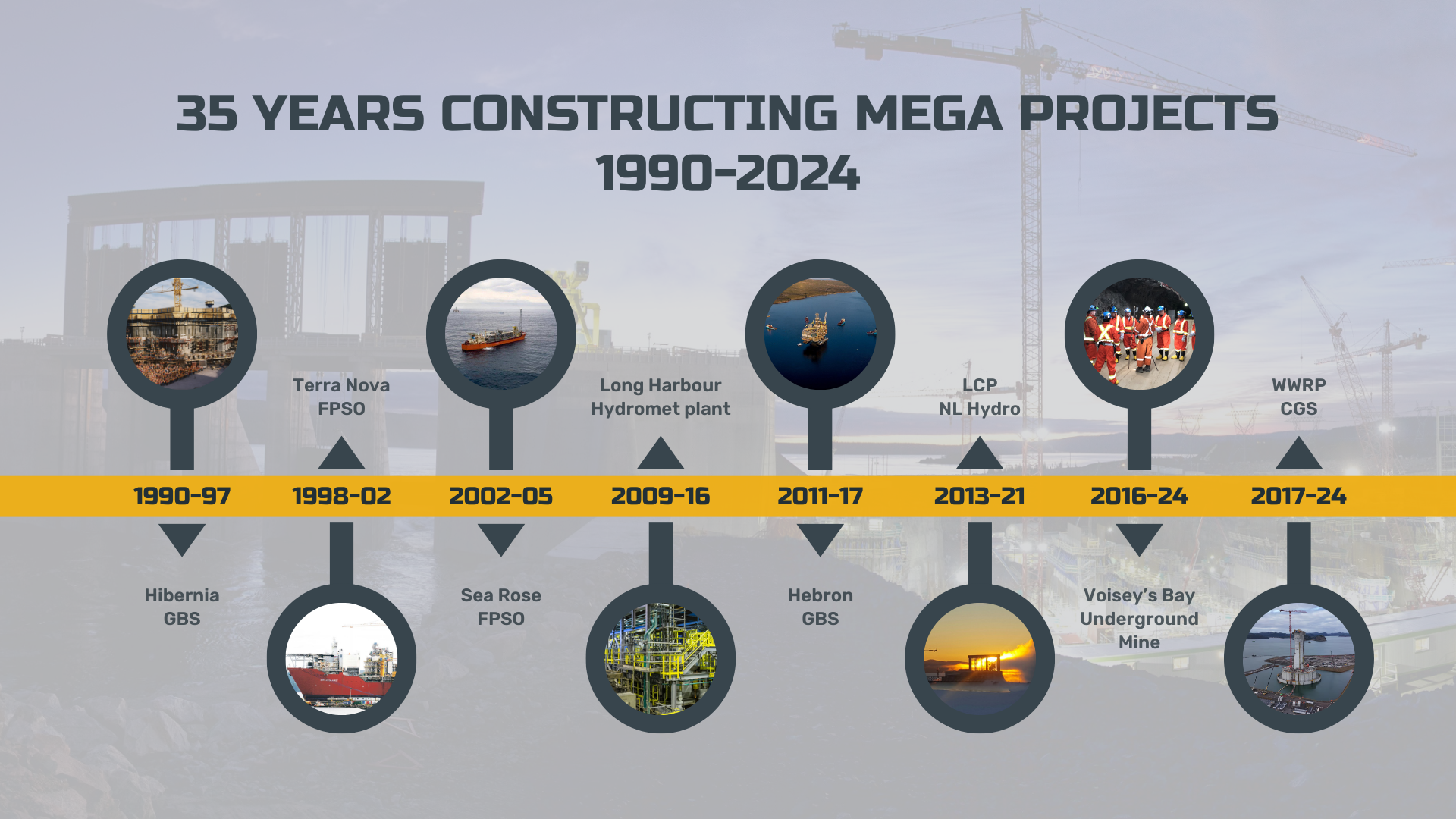
35 Years of Mega Construction Projects (1990–2024)
Newfoundland and Labrador’s experience with mega projects began in earnest with the Hibernia Gravity Based Structure and has continued through decades of offshore, hydro, and industrial development, including:
- Hibernia GBS
- Terra Nova FPSO
- SeaRose FPSO
- Long Harbour Hydromet Plant
- Hebron Gravity Based Structure
- Lower Churchill Hydro Generation
- Voisey’s Bay Underground Mine
- West White Rose Project
Together, these projects account for hundreds of millions of construction person-hours, with a significant portion of work completed by Newfoundland and Labrador workers.
Employment Impacts That Last
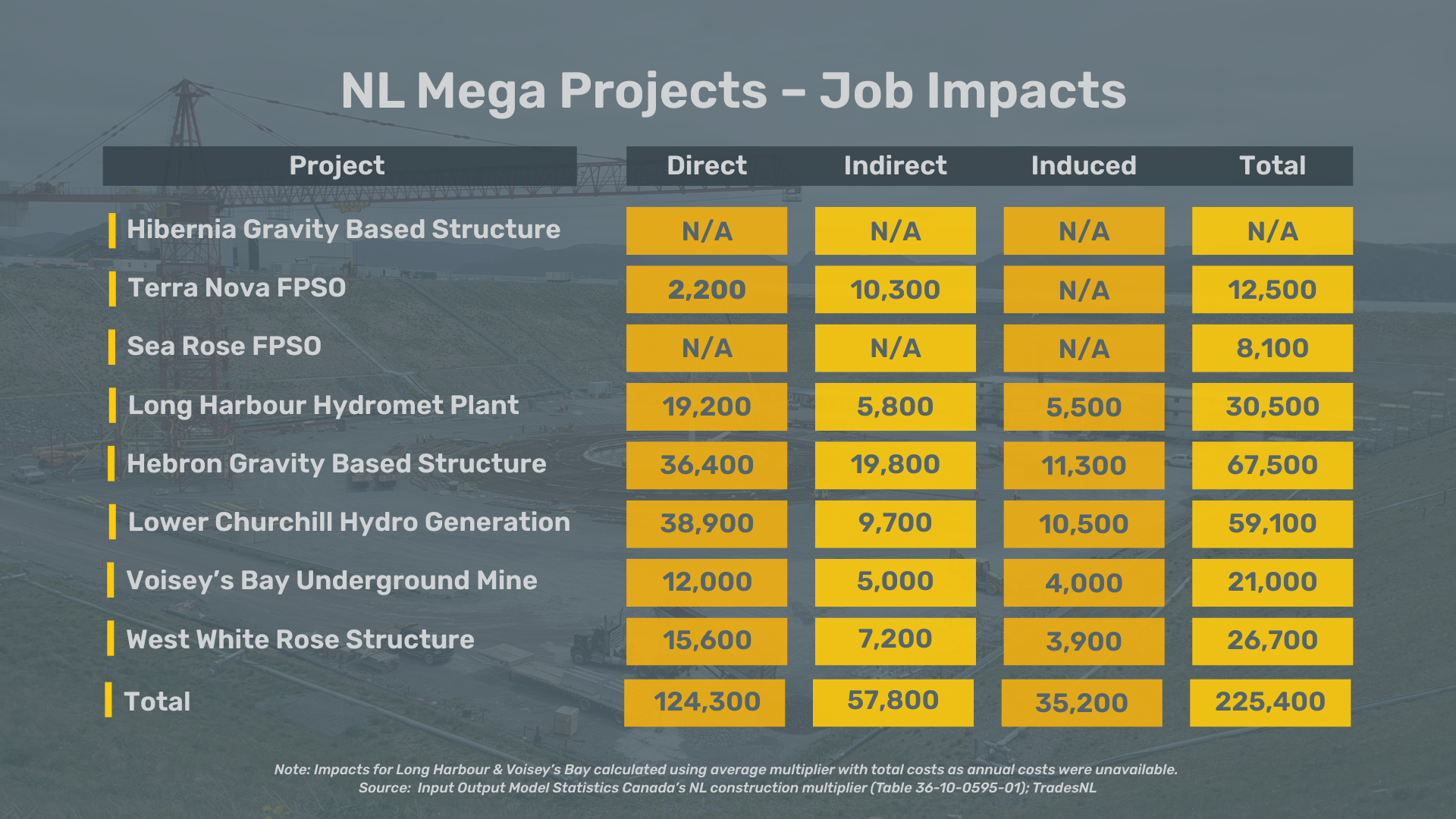
Mega construction projects don’t just create short-term jobs - they support sustained employment over many years.
- Peak employment on individual projects reached thousands of workers
- Multiple projects were often constructed at the same time, increasing total employment demand
- A strong emphasis on local labour participation, with most projects employing a majority NL workforce
- Average employment levels remained strong across multi-year project timelines
This long-term stability strengthens communities, supports skilled trades training, and helps retain talent within the province.
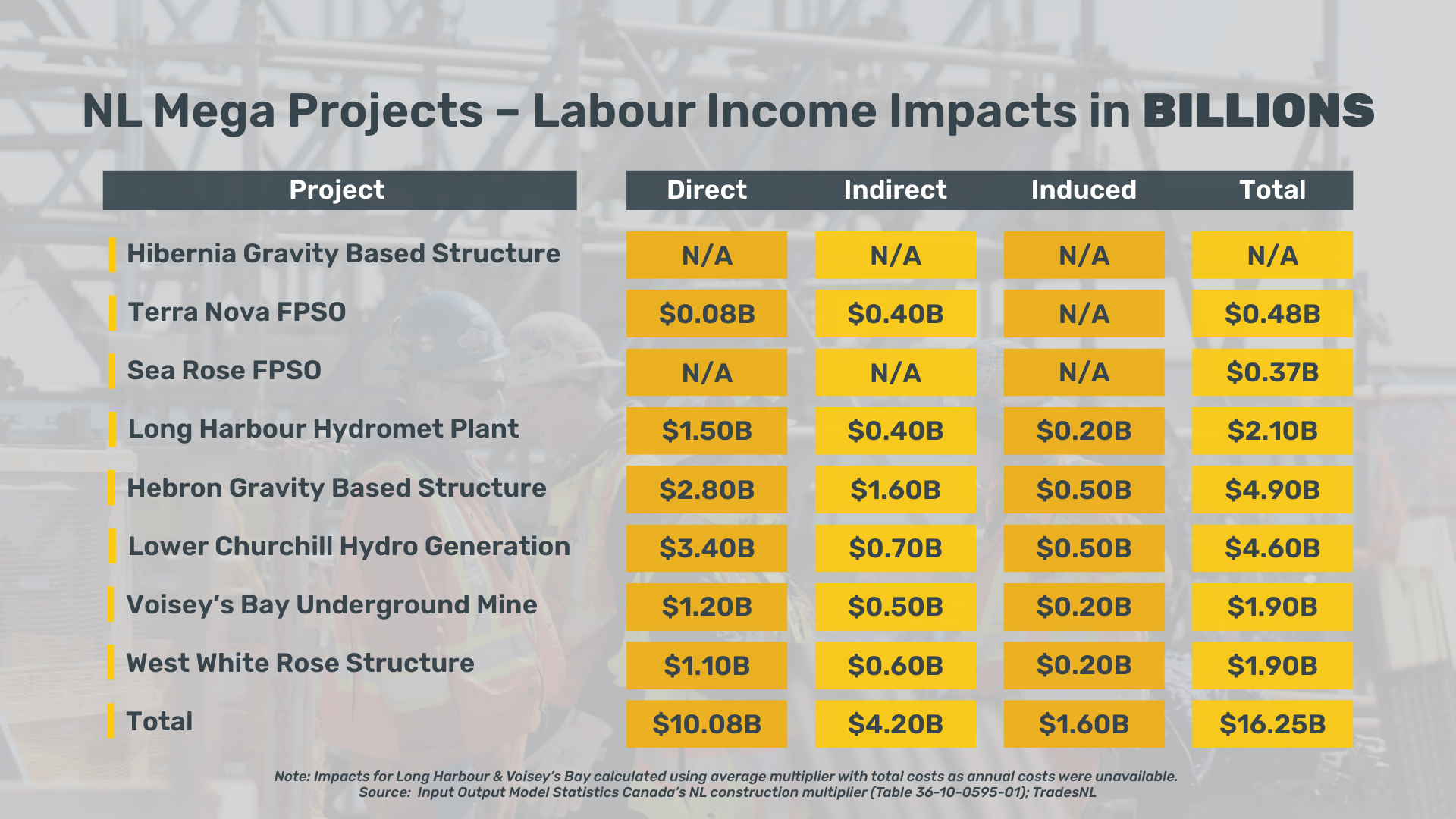
Billions in Labour Income and Economic Activity
Major construction projects deliver wide-reaching economic benefits beyond the job site.
These projects generated:
- Billions of dollars in direct labour income
- Significant indirect and induced economic activity
- Thousands of additional jobs supported across related industries
The total economic impact underscores construction’s vital role in provincial growth, fiscal stability, and community development.
Why This Data Matters
Understanding the true economic value of construction projects is essential for:
- Policymakers evaluating infrastructure and resource development decisions
- Industry leaders are planning workforce and investment strategies
- Community stakeholders assessing long-term regional benefits
- Media and researchers seeking reliable, evidence-based insights
This research demonstrates that construction is not only a job creator - it is a strategic economic engine for Newfoundland and Labrador.
Learn More About the Economic Impact of Construction in NL
Whether you are a policymaker, industry leader, or community stakeholder, understanding the economic value of construction projects is key to informed decision-making.
Download the Full Report
Access detailed data, employment figures, and economic impact analysis.
Contact Our Team
Have questions or need additional insights? Get in touch with Trades NL to learn more.
Acknowledgements
This work is the result of a collaborative effort across Trades NL’s leadership team. The insights, analysis, and findings presented here reflect a shared commitment to evidence-based advocacy and informed decision-making for the construction industry.
We would like to acknowledge our leadership team who supported and guided this work:

Bob Fiander
Executive Director

Corey Parsons
Deputy Director

Melinda Wade
Manager of Corporate Affairs

Rachelle Cochrane
Director of Policy, Innovation & Economic Research
Special recognition goes to Rachelle Cochrane, Director of Policy, Innovation & Economic Research, whose in-depth research and analysis played a critical role in shaping this report.